Do YouTube Promotions Count Toward 4,000 Watch Hours? What Counts in 2026 — and What Changes in 2027
You upload the video.
You spend hours editing it, second-guess the thumbnail, rewrite the title more times than you planned, and refresh YouTube Studio a little too often.
Then the views begin to climb—and if monetization is the goal, one question naturally follows:
Do watch hours from YouTube promotions count toward the 4,000 public watch hours needed for the YouTube Partner Program?
The straightforward answer is no.
Watch time that comes directly from paid YouTube ad campaigns does not count toward the 4,000-watch-hour requirement for YPP eligibility. YouTube treats ad-driven watch time separately from the public watch hours creators need to qualify.
The same applies to subscribers: subscribers gained directly through paid campaigns do not count toward YPP eligibility either.
That can feel discouraging, especially when you are a smaller creator putting real time, energy, and money into reaching monetization.
But paid promotion is not fake, useless, or a bad idea by default. It simply serves a different purpose.
Promotions can help more people discover your content, introduce your channel to a new audience, and give a strong video an initial push. Monetization eligibility, however, depends on the audience growth and watch time you earn organically.
Understanding the difference helps you use promotion more intentionally—and avoid spending money expecting it to solve a monetization requirement it was never designed to meet.
What Are the YouTube Monetization Requirements in 2026?
As of August 2026, creators seeking access to YouTube’s full advertising and YouTube Premium revenue-sharing features can qualify through either long-form content or Shorts.
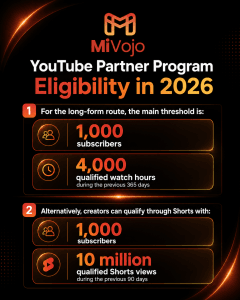
Meeting the numbers does not automatically guarantee acceptance. Channels still have to satisfy YouTube’s monetization policies and go through YouTube’s review process.
There is also an earlier-entry version of the YouTube Partner Program in eligible countries.
Creators may gain access to certain features such as channel memberships, Super Chat, Super Stickers, Super Thanks and selected Shopping features after reaching:
500 subscribers
3 valid public uploads in the previous 90 days
And either 3,000 qualified watch hours in the previous 12 months or 3 million qualified Shorts views in the previous 90 days
That earlier threshold is not the same as unlocking full ad-revenue sharing.
So when creators talk about “getting monetized,” it is important to know which YPP level they actually mean.
What Actually Counts Toward the 4,000 Watch Hours?
This is where things become much clearer.
YouTube currently defines qualifying watch hours for this threshold as watch hours earned from public long-form videos.
According to YouTube, watch hours from the following do not count toward the YPP watch-hour threshold:
- Private videos
- Unlisted videos
- Deleted videos
- Ad campaigns
- YouTube Shorts
- Livestreams that are unlisted, deleted, or not converted to video on demand
Watch time generated from Shorts viewed in the Shorts Feed also does not contribute toward the 4,000-hour long-form threshold. Shorts have their own separate eligibility route.
That word qualified matters.
You may see watch time somewhere in your analytics and still find that your YPP eligibility number is different.
Not every minute watched on YouTube is necessarily a qualified minute toward monetization.
So, Do YouTube Ads Count Toward Watch Hours?
YouTube ads can absolutely bring real attention to your videos. They can generate legitimate views, introduce your content to new people, and create meaningful exposure for your channel.
But there is one important catch: watch time that comes directly from a paid advertising campaign does not count toward the watch-hour requirement for YouTube Partner Program eligibility.
That distinction matters more than many creators realize.
Imagine promoting a video and seeing thousands of people watch it. Those are real viewers. The views are real. The exposure is real, too.
However, the watch time generated through the ad itself is excluded from your qualifying YPP watch hours. YouTube’s Promote guidance also states that watch hours and subscribers gained through ad campaigns do not count toward YPP eligibility.
So if someone says, “Buy this promotion package and we’ll get you the 4,000 watch hours you need for monetization,” be very careful.
Legitimate YouTube advertising does not work that way. Paid promotion may help people discover your channel, but it cannot directly buy the watch hours required for monetization.
But Are Promoted YouTube Views Real?
This is where creators sometimes mix up two completely separate questions.
Question 1:
Do paid campaign watch hours count toward YPP eligibility?
No.
Question 2:
Can views generated through legitimate YouTube promotion be real?
Yes.
YouTube explicitly says that views and subscribers generated through its Promote advertising product are legitimate.
This gives us one of the most important lessons in this entire article:
Legitimate does not automatically mean YPP-eligible.
A real person can discover your video through an advertisement, choose to watch it, and even subscribe.
That does not change YouTube’s rule that activity attributed directly to the ad campaign is excluded from the YPP eligibility thresholds.
And this is completely different from fake views.
YouTube prohibits services and techniques designed to artificially inflate views, subscribers, likes or other engagement metrics through automated or deceptive methods. YouTube also warns creators that even when they hire someone else to promote their channel, they can still be affected by the methods that provider uses.
That is why knowing where your promotion traffic comes from matters.
There Is One Very Important Exception: Follow-on Views
This is where paid promotion can still make a meaningful difference.
Someone might first discover one of your videos through a promotion, enjoy what they see, and remember your channel. Later, they may return on their own to watch another video, explore your channel, or subscribe.
YouTube refers to these as Follow-on Views: organic views that happen after a viewer first encounters your content through a promotion.
Unlike watch time generated directly by the ad, these later organic views can count toward YPP eligibility.
That is the real value of promotion. You cannot use ads to simply buy your way to the monetization threshold. But you can use them to introduce the right people to your work.
If those viewers choose to come back, watch more, and become part of your audience naturally, that engagement can support real, long-term channel growth—and contribute toward monetization eligibility.
Paid Promotion Is Discovery, Not a Shortcut to Monetization
This is the part that often gets overlooked when you are focused on reaching 4,000 watch hours.
You have put in the work. You have made the videos, spent time improving them, and you know that some of them are genuinely good. Your friends say so, and the people who do find your content sometimes leave thoughtful, encouraging comments.
The difficult part is that not enough people are discovering it yet.
And honestly, that can be discouraging. For many creators, the hardest part is not making videos—it is continuing to make them when it feels like hardly anyone is watching.
Paid promotion can help with that visibility problem. It can put your content in front of people who may never have found your channel otherwise.
What it cannot do is replace the organic watch hours and subscriber requirements YouTube uses for monetization.
Think of promotion as opening the door. It helps new people find your video. But once they are there, what happens next still depends on the content itself—whether they want to keep watching, visit your channel, and come back for more.

Does YouTube Promotion Help the Algorithm?
Promotion Does Not “Hack” the Algorithm
There is another common myth worth clearing up: running a promotion does not automatically improve a video’s organic ranking.
YouTube says that promotions do not affect the organic performance of a video or channel. In other words, YouTube’s search and recommendation systems judge your content based on how it performs when it is shown to viewers organically—not on the results of a paid campaign.
So be cautious when you see claims like:
“Run ads and YouTube’s algorithm will automatically start pushing your videos.”
That is not a promise YouTube makes.
The real value of promotion is much simpler: it can help new people discover your channel. Someone may first see your video through an ad, enjoy it, and later choose to watch more of your content on their own.
But ads cannot create a loyal audience by themselves. For people to return, subscribe, and keep watching, the content still has to give them a reason to come back.
Important 2026 Update: More Public Views Do Not Mean More YPP Watch Hours
There is another new change creators should understand.
Beginning August 24, 2026, YouTube changed how it counts public views across video formats. A public view can now be counted from the moment a video begins to play.
However, YouTube specifically states that this update does not change YPP earnings or eligibility. The platform continues to use separate qualified and engaged metrics for monetization purposes.
So if your public view count starts behaving differently, do not assume that every visible view has suddenly become monetization-eligible watch time.
Again:
Views, watch time and qualified YPP watch hours are related metrics, but they are not identical.
What Does 4,000 Watch Hours Actually Mean?
Four thousand hours sounds abstract until you turn it into minutes.
4,000 hours = 240,000 minutes of qualified watch time.
How many views that requires depends entirely on how long people watch.
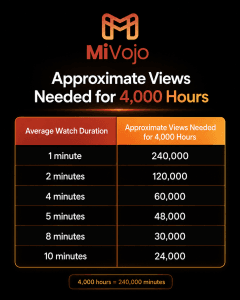
These figures are mathematical examples, not guarantees. Most importantly, the watch time would still need to qualify under YouTube’s YPP rules.
This is why asking “How many views equal 4,000 watch hours?” never has one universal answer.
A channel with excellent viewer retention can need dramatically fewer views than a channel where viewers leave after the opening seconds.
If you want to explore that calculation in more detail, read our guide How Long Does It Take to Get 4000 Hours of Watch Time on YouTube?
What Changes to YouTube Monetization in 2027?
This is the part creators need to start preparing for now.
YouTube has officially announced that beginning February 1, 2027, the threshold for new creators seeking ads and YouTube Premium revenue sharing will increase.
New applicants will need:
Long-form route
1,000 subscribers + 8,000 qualified watch hours during the previous 365 days
or:
Shorts route
1,000 subscribers + 20 million qualified Shorts views during the previous 90 days
That means the long-form watch-hour requirement is doubling from 4,000 to 8,000 hours for new applicants.
That is a major change.
But there is an equally important detail:
If you are already in YPP, YouTube says your YPP status will not be affected by the new entry threshold.
The change applies to new entry into the ads and Premium revenue-sharing level beginning February 1, 2027.
YouTube has also said that the earlier eligibility thresholds for features such as fan funding will remain at 500 subscribers plus either 3,000 qualified watch hours or 3 million qualified Shorts views, along with the applicable requirements.
For creators still working toward monetization, this makes 2026 a particularly important year to understand the rules rather than chase shortcuts.
Will Paid Promotion Count Toward the New 8,000-Hour Requirement?
Based on YouTube’s announced rules, the answer remains no.
The 2027 requirement specifically refers to qualified watch hours, and YouTube’s YPP documentation excludes watch hours generated through ad campaigns from qualified YPP watch hours.
In other words:
The target may change. The shortcut does not suddenly appear.
Whether the requirement is 4,000 hours in 2026 or 8,000 qualified hours for new applicants beginning in February 2027, paid campaign watch time should not be treated as a way to purchase eligibility.
So What Is the Fastest Legitimate Way to Build Qualified Watch Hours?
There is no magic package that turns money into qualified watch hours.
What you can do is build a smarter system around your content.
- Prioritize public long-form videos
If your goal is the long-form YPP pathway, qualified watch time from public long-form content is what matters.
- Improve the first 30–60 seconds
Getting the click is only step one.
Your opening needs to immediately prove to viewers that the title and thumbnail were worth clicking.
Remove unnecessarily long intros.
Tell viewers what they are about to get.
Give them a reason to stay.
- Create videos around subjects people already want
Search-driven content can continue attracting viewers months or even years after publication.
Instead of asking only:
“What do I want to make?”
also ask:
“What is my audience already trying to find?”
- Build connected videos
One successful video should have somewhere useful to send the viewer next.
Create related videos, series and logical content journeys.
The goal is not simply one view.
It is giving somebody a reason to explore your channel.
- Learn from retention instead of obsessing only over views
If thousands of people click but disappear almost immediately, more traffic alone may not solve the problem.
Look at where people leave.
Look at the videos people finish.
Look at the topics that bring viewers back.
Those clues are often far more useful than simply chasing a bigger number under the video.
- Use promotion for what promotion is actually good at
If you have content you believe deserves a larger audience, legitimate advertising can help you create exposure.
But promote with the correct expectation:
You are paying for distribution, not purchasing YPP eligibility.
That distinction matters.
Can You Buy 4,000 YouTube Watch Hours?
If by “buy” you mean paying someone to artificially create 4,000 eligible watch hours, that is not a legitimate or safe path to monetization.
YouTube does not allow artificially inflated views, subscribers, watch time, or other engagement. Invalid traffic may be removed, and channels that violate its policies can face enforcement action.
And if you mean using legitimate Google or YouTube ads, those campaigns will not solve the problem either: watch time generated directly through paid promotion does not count toward the YouTube Partner Program threshold.
So, in practical terms, the answer is no.
Avoid services that promise “4,000 monetization watch hours.” Instead, focus on earning qualifying watch time organically through content that people genuinely choose to watch.
Advertising can still be useful for helping new viewers discover your channel—but treat it as a visibility tool, not a shortcut to monetization.
Where MiVojo Fits In
At MiVojo, we believe creators should understand exactly what they are paying for before they spend anything.
We do not sell “4,000 monetization watch hours,” and we do not claim that a promotion package can guarantee acceptance into the YouTube Partner Program. We also do not use bots, fake views, or artificial engagement to inflate numbers.
Instead, MiVojo promotes YouTube videos through official Google Ads campaigns, helping creators introduce their content to real people. Our purpose is to support visibility and discovery—not to bypass YouTube’s monetization requirements.
The best outcome is not simply a higher view count. It is reaching someone who discovers your video through a campaign, enjoys it, remembers your channel, and later returns to watch more on their own. That is the beginning of a real audience relationship.
Before spending money on promotion, it is worth knowing how legitimate advertising differs from artificial traffic. You can read our guide, Authentic YouTube Views: What They Are and Why They Matter in 2026, for a clearer explanation.
You can also explore our YouTube Ads Video Promotion service to see how our Google Ads-based campaigns work.
The Truth Creators Need to Hear
If you are sitting at 600 watch hours, 1,800 watch hours, or painfully close to 4,000, hearing that paid promotion cannot simply fill in the gap probably is not the answer you were hoping for.
We get it. Growing a channel can feel painfully slow when you are the one behind the screen.
You might spend five hours filming, editing, rewriting the title, and making a thumbnail—only for the video to land on 63 views. Then you see someone post something that feels very similar and somehow reach 20,000 views before lunch. It is enough to make you wonder whether YouTube has personally misplaced your channel.
That frustration is real, and it is exactly why some companies can get away with selling creators unrealistic promises. When growth feels slow, a shortcut can sound very convincing.
But protecting your channel matters more than reaching one milestone quickly.
Four thousand watch hours were never meant to be something you could simply purchase and tick off like an online shopping order. And as the threshold rises for new applicants in 2027, that same principle will matter even more.
The sustainable approach is less glamorous—but much more effective:
- Make videos people genuinely want to watch
- Improve something with every upload
- Help the right viewers discover your content
- Give them a reason to return
Promotion can help with discovery. Your content is what builds the relationship.
It may be slower than a miracle promise—but real channels are not built on miracle promises. They are built one genuinely interested viewer at a time.
No. Watch hours generated directly through ad campaigns do not count toward YouTube’s YPP watch-hour eligibility threshold.
Paid campaign watch hours are excluded from YPP eligibility. However, legitimate advertising can still generate real visibility and introduce viewers to your channel.
Subscribers gained directly through ad campaigns do not count toward YPP eligibility thresholds. YouTube nevertheless states that subscribers generated through its Promote campaigns are legitimate.
Potentially, yes — indirectly. YouTube says Follow-on Views, where someone watches your content organically after encountering promoted content, can count toward YPP eligibility.
4,000 hours equals 240,000 minutes.
Watch time from Shorts viewed in the Shorts Feed does not count toward the long-form 4,000-hour threshold. Shorts have a separate YPP eligibility route.
For full ads and YouTube Premium revenue sharing, creators currently need 1,000 subscribers plus either 4,000 qualified watch hours over the previous 12 months or 10 million qualified Shorts views over the previous 90 days, along with YouTube’s other eligibility requirements.
Yes. YouTube has announced that from February 1, 2027, new applicants for ads and Premium revenue sharing will need 1,000 subscribers plus either 8,000 qualified watch hours in the previous 365 days or 20 million qualified Shorts views in the previous 90 days. Existing YPP members are not affected by the new entry threshold.
Artificially manipulating watch time may violate YouTube’s policies, while legitimate watch time generated through ad campaigns does not count toward YPP thresholds. Buying “4,000 monetization hours” is therefore not a legitimate shortcut.
YouTube says promotions do not affect a video’s organic performance. Organic search and recommendation performance is evaluated separately from paid promotion.
Final Thoughts
So, do YouTube promotions count toward the 4,000 watch hours needed for monetization?
No—and that is exactly why a trustworthy promotion service should never suggest otherwise.
In 2026, YouTube’s full ads and Premium long-form monetization pathway requires 1,000 subscribers and 4,000 qualified public watch hours within the previous 12 months. From February 1, 2027, new applicants will need 8,000 qualified watch hours instead. Watch time generated directly through paid ad campaigns does not count toward either threshold.
That does not make legitimate promotion pointless. It simply means promotion has a different job.
It can introduce your videos to real people who may never have discovered your channel otherwise. And sometimes, one promoted view can turn into something much more valuable:
- Someone remembers your channel.
- Someone watches another video.
- Someone returns next week.
- Someone becomes part of the audience you have been trying to build all along.
You cannot buy a genuine connection between a creator and an audience. But you can give the right people a chance to discover your work—and give that connection somewhere to begin.
That is where MiVojo can help. Our YouTube Ads Video Promotion service uses official Google Ads campaigns to help creators reach real viewers, build awareness, and put strong content in front of the people most likely to enjoy it.
No fake engagement. No monetization shortcuts. Just honest promotion designed to help your channel get seen.