
Do You Really Know How YouTube’s Algorithm Works?
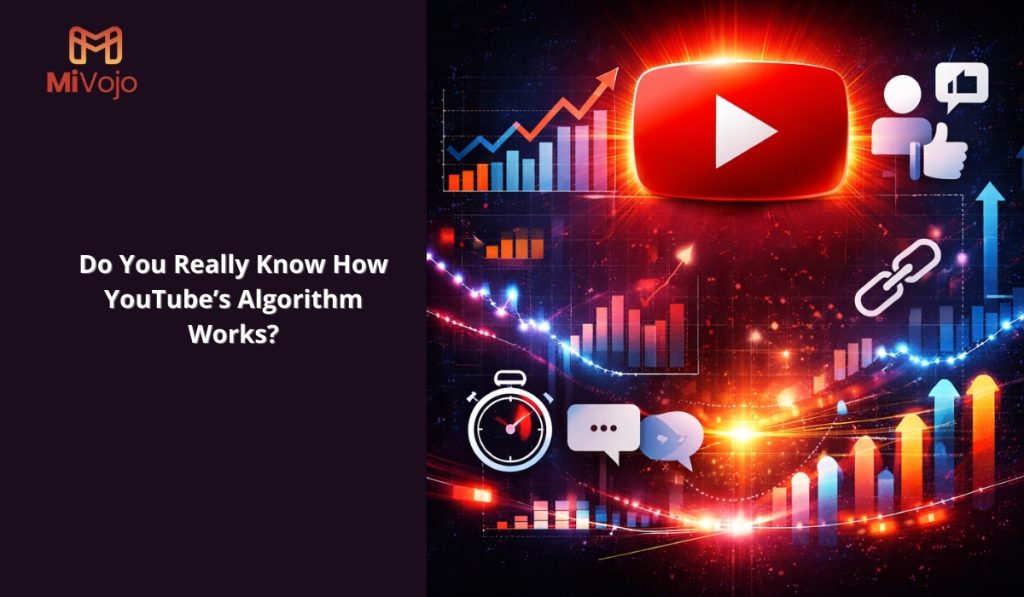
If you search online for how YouTube’s algorithm works, you’ll find thousands of videos, threads, and “expert tips.”
Most of them promise shortcuts. Many contradict each other. And almost all of them leave creators more confused than before.
Yet the same questions keep coming up:
Why do some YouTube videos get views while others don’t?
Why does one video suddenly take off while another dies after a few hours?
Is the YouTube algorithm random, broken, or biased?
The truth is simpler, and more uncomfortable, than most people expect.
The YouTube algorithm is not complicated.
It’s just widely misunderstood.
The Core Truth About the YouTube Algorithm
Let’s start by clearing up the biggest myth.
YouTube does not promote videos.
It promotes viewer behavior.
The algorithm’s only real goal is to keep people on the platform for as long as possible. Everything else, views, impressions, reach, is a byproduct of that goal.
It doesn’t care:
- how much effort you put into a video
- how small or new your channel is
- how good the editing looks
What it cares about is this single question:
When people watch this video, do they stay?
If the answer is yes, the algorithm expands distribution.
If the answer is no, the video stops being pushed.
There is no punishment, no shadowban, and no personal bias.
Only data.
How YouTube Tests a New Video
When a video is uploaded, YouTube doesn’t immediately decide whether it will succeed or fail.
Instead, it runs a test.
The video is shown to a small audience, usually made up of subscribers and viewers with similar interests. Then YouTube watches closely.
Do people click when they see the video?
Do they keep watching once it starts?
Do they continue watching YouTube after the video ends?
Based on those signals, the platform decides whether it’s worth showing the video to more people.
This is why understanding how YouTube recommends videos is far more important than chasing tricks or hacks.
The Signals That Decide Everything
If you want to understand why YouTube videos don’t get views, you need to understand the signals the algorithm responds to.
Click-Through Rate (CTR)
CTR measures how many people click your video after seeing it.
This is driven almost entirely by your title and thumbnail.
If people don’t click, the algorithm has nothing to work with.
A low CTR tells YouTube:
“This video isn’t interesting enough to show.”
No amount of tags, SEO tweaks, or promotion will fix that.
Retention and Watch Time
Retention measures how long viewers stay and where they drop off.
Watch time measures how much total viewing your video generates.
This is the most important part of YouTube optimization.
A video with average CTR but strong retention will often outperform a video with high CTR and weak retention. Why? Because retention proves that the video delivers on its promise.
This is why the first 5–10 seconds of a YouTube video can decide its entire lifespan.
Session Time
Session time looks at what happens after your video finishes.
If viewers:
- watch another video
- stay on YouTube
- continue browsing
your video becomes valuable to the platform.
This is why channels that create connected content, series, and follow-up videos tend to grow faster than those relying on one-off uploads.
Viewer Satisfaction
YouTube also looks at indirect feedback: likes, comments, shares, and negative signals like “Not interested.”
These signals help the platform understand whether viewers felt the video was worth their time.
High satisfaction doesn’t mean massive engagement.
It means the right audience had a good experience.
Why Most Creators Get the Algorithm Wrong
Creators often blame the YouTube algorithm because they focus on the wrong things.
They worry about:
- upload frequency
- tags and keywords
- niche size
- posting times
But these factors have far less impact than most people think.
The algorithm doesn’t punish small channels.
It doesn’t remember past failures.
And it doesn’t decide your future based on subscriber count.
Each video is evaluated largely on its own performance.
That’s why a channel with low views can suddenly grow months later, without changing niche or audience. One video simply aligned better with viewer behavior.
YouTube SEO vs YouTube Optimization
One of the most common mistakes is confusing YouTube SEO with YouTube optimization.
SEO helps YouTube understand what a video is about.
Optimization helps YouTube decide whether the video should be promoted.
SEO alone won’t save a video that people don’t watch.
Real YouTube video optimization focuses on:
- making videos clickable
- keeping viewers engaged
- creating momentum across multiple uploads
That’s what actually moves the algorithm.
Why Promotion Alone Doesn’t Work
Many creators turn to YouTube video promotion hoping it will “force” growth.
Promotion can help, but only if the video is already optimized.
If a promoted video:
- has weak retention
- fails to deliver on its title
- doesn’t lead viewers to watch more
the algorithm simply learns faster that the video isn’t worth pushing.
Effective YouTube video promotion amplifies what already works.
It doesn’t fix broken content.
The Shift That Changes Everything
Creators who grow consistently stop asking:
“How do I beat the YouTube algorithm?”
And start asking:
“What makes someone stay?”
That shift changes how you:
- write titles
- design thumbnails
- structure openings
- plan content sequences
Optimization is not manipulation.
It’s communication.
When your video clearly communicates value, relevance, and intent, the algorithm follows the audience, not the other way around.
Why Momentum Beats Virality
Virality is unpredictable.
Momentum is not.
A single viral video with no follow-up often leads nowhere.
A sequence of optimized, connected videos builds sustainable growth.
YouTube rewards patterns of behavior over time, not isolated spikes.
This is why serious creators focus on systems, not luck.
Final Thought
If your YouTube videos aren’t getting views, the algorithm is not broken, and it’s not against you.
It’s responding to signals.
Once you understand how YouTube’s algorithm actually works, growth becomes far more strategic and far less frustrating.
At MiVojo, this is exactly how we approach YouTube video promotion:
by aligning content with real viewer behavior, optimizing what matters, and amplifying videos that are built to perform.
Because when your videos work with the algorithm, promotion doesn’t feel like a gamble, it feels like leverage.




Pingback: Authentic YouTube Views: What They Are and Why They Matter in 2026 - MiVojo Promote Your Video